

News
Chai expands Hebrew, Yiddish and French-speaking therapists amid sustained surge in counselling
Jan
Charity says need for counselling is 10 per cent higher than before Covid
Chai Cancer Care has expanded its team of Hebrew, Yiddish and French-speaking therapists as demand for cancer counselling remains significantly higher than before the pandemic, the charity has announced.
Releasing the figures this week (21 Jan), Chai – the UK Jewish community’s leading organisation supporting men, women and children affected by a cancer diagnosis – said the expansion reflects continued demand for counselling and the importance of offering therapy in a client’s native language.
The charity said counselling remains a central part of its service, with many clients reporting that speaking in their first language allows them to communicate more clearly about fear, grief and uncertainty following a diagnosis.
The expansion comes as figures show a sustained increase in counselling demand. Individual cancer counselling appointments at Chai rose by more than 15 per cent in a single year, increasing from 10,595 appointments between November 2019 and October 2020 to 12,200 between November 2020 and October 2021, during the height of the pandemic. Although demand has reduced slightly since that peak, it remains well above pre-Covid levels – with Chai delivering 11,650 individual counselling sessions from November 2024 to October 2025. Overall, counselling demand today is around 10 per cent higher than before Covid, when more people turned to Chai for remote one-to-one counselling after complementary therapies were temporarily scaled back.
Israel-born Ori* (not his real name), in his 40s, was supported by Chai following the passing of his wife, Hannah*. He says the support from his Hebrew-speaking counsellor was life- changing.
“Hannah* and I met on JDate. From the first date, I knew she was the one. She was funny, smiled a lot, asked plenty of questions, was interesting, and, of course, beautiful,” he recalls, saying they went on to get married and have children. Later, she was diagnosed with cancer after experiencing flu-like symptoms. Within a few years, she had passed away.
He shares: “Chai continued to check in on us. They recognised that my mental health was not in a good place and encouraged me to seek therapy. I agreed, but only if I could see an Israeli therapist. I needed someone who could understand the mentality I grew up with.”
He continues: “My therapist changed my life. I honestly can’t say enough about how she changed my life. I wouldn’t have made the progress I did without her. I needed someone who understood my background, not just the language, but my mentality, my Israeli upbringing. It took me almost a year to get there, I made real strides.”
Ori* adds: “Being able to speak in Hebrew made therapy so much easier. I speak it every day, so it was natural. Therapy was in my mother tongue, and that made all the difference. There are still moments when I feel sad, especially when the kids do things that would have made Hannah* proud. The coping tools I gained through Chai are what keep me going. My children still need a lot of attention, and it’s tough. But because of the support I had at Chai, I’m able to manage. Without them, I wouldn’t be the same person I am today.”
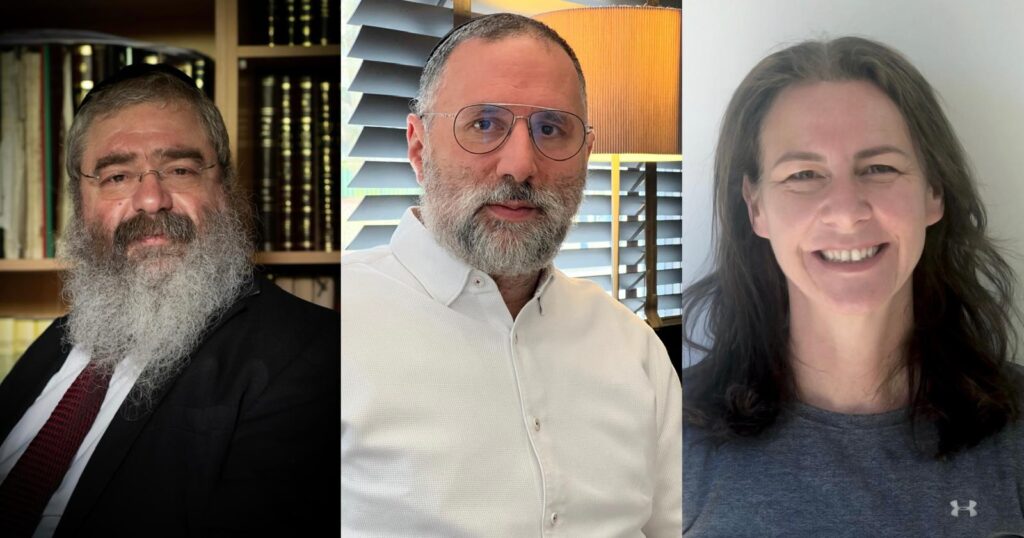
Ukraine-born Dayan Shalom Kupperman speaks Russian, Hebrew and English having been educated at Charedi yeshivas and kollels across Israel after making aliyah from the then USSR- controlled region aged 10. Dayan Kupperman, the senior rabbi of Etz Chaim Synagogue in Leeds, has also trained as a psychotherapist – working with Chai for the past 13 years and supporting people affected by cancer in Leeds, Manchester and remotely. Whilst the majority of the people he helps speak English, 10 per cent of his clients come to Dayan Kupperman for support in their native tongue – including Hebrew and Russian.
“It is significant that a person can have a possibility to be counselled in their mother tongue at Chai,” he says, adding: “There are words in Hebrew that don’t have English equivalents, and there are words in English that don’t have Hebrew equivalents, and the same with Russian.” He says: “At Chai, counsellors and psychotherapists try to provide those people with the kind of listening that they don’t get in other places.”
Stamford Hill-based Mayer Lindner, a psychotherapist who has worked with Chai clients for more than two years, speaks fluent Yiddish and English. He says: “People from the Charedi and Chassidic communities often share very specific realities, including strong communal life, religious and spiritual involvement, and large families. When the person supporting them truly understands this, clients do not need to explain their entire world before they can begin to talk about their experience and what they are going through.
“That is why cultural and language understanding are essential in this work. For many clients, English is very difficult. Having a counsellor at Chai who speaks their mother tongue can be life changing, and in some cases a lifeline, because without that they simply would not access counselling at all. When people are forced to switch from their first language to a second language, they can get stuck, as certain words do not carry the same meaning or emotional weight. Being able to speak naturally in your own language, without barriers, can make it a lot easier.”
He adds: “You cannot hide cancer, and you cannot explain it away to your wider community. That is why having the support of a counsellor who is deeply sensitive to your culture, your background and your language makes such a difference. There is something incredibly powerful about being held and supported by someone from your own community.”
Tal Shribman, a Hebrew-speaking psychotherapist and art psychotherapist at Chai Cancer Care, says clients find comfort in speaking in their native tongue. She explains: “Language plays a profound role in therapy. When clients can speak in their mother tongue, they often access deeper emotions and speak with greater ease. Shared language and cultural background with your therapist make it easier to describe nuanced feelings, use familiar expressions, images or metaphors, and feel understood without needing to translate their inner world. For many, this creates a sense of ‘home and safety’, which can be deeply grounding during emotionally intense periods.”
Louise Hager MBE, Chairman of Chai, says: “Chai is here to support people in the community affected by a cancer diagnosis, and we are very aware of how many different backgrounds and countries people in our community come from. Many of the people we support come from different parts of the world, and that shapes how they communicate and seek support – and we are here to help in any way we can.”
She adds: “Counselling is a significant part of the work we do, and it’s important that clients are able to express themselves in their native language, rather than having to search for the right words in a second or third language that may not reflect how they really feel. Many also tell us they feel more comfortable speaking to someone who understands their cultural background, as well as their language. At Chai, clear, supportive and sensitive communication has always been key to how we support clients affected by a diagnosis. Expanding our team of native-language counsellors is a natural extension of that approach.”