

News
More Support Needed for Children of Parents with Cancer
Feb
Marking Children’s Mental Health Awareness Week and World Cancer Day, Chai highlights the growing need for specialist services for young people affected by a parent’s cancer diagnosis.
To mark this Children’s Mental Health Awareness Week (3-9 February 2025) and World Cancer Day (4 February 2025), Chai Cancer Care is calling for greater recognition of the rising need to support children whose parents have been diagnosed with cancer.
With one in three Chai clients diagnosed with cancer being under the age of 50, the UK Jewish community’s leading cancer support service has identifi ed a rising demand for specialised services that help parents navigate explaining a diagnosis to children.
To meet this need, Chai is expanding its Parent Support Group, an initiative that equips parents with the tools, guidance and language to help their children cope with the impact of cancer on family life.
The call for enhanced support comes as The Princess of Wales publicly shared her own experience of explaining her cancer diagnosis to her children, highlighting the challenges faced by parents in similar situations. At the time, Her Royal Highness said: “It has taken us time to explain everything to George, Charlotte and Louis in a way that is appropriate for them.”
Reflecting on the importance of these conversations, Chai’s Parent Support Group facilitator, Sara Rey, a child and adolescent psychotherapist, said: “From my experience, I’ve seen the anxiety and fears of children – as well as their parents. Parents would go to the kitchen to have conversations that they thought their children couldn’t hear – whilst children had questions that they would ask me because they didn’t want to upset their parents. The parents were trying to protect the children, and the children were doing the same – but it meant that they weren’t communicating with one another.”
Sara explained: “The children would would want to know if cancer was contagious, if they would be looked after if something happened to their mum or dad, and what will happen at school pick-up if mum is at hospital having treatment. It was noticing this, as well as the questions that children asked in sessions that made Chai want to create a therapeutic space where parents with a cancer diagnosis could regularly meet to support one another.”
She added: “I have always wanted to work closely with parents when it comes to talking to their children; that’s why we launched the Parent Support Group. It’s a group that provides support to families when one parent has been diagnosed with cancer. It helps when it comes to language, and how it is framed, sharing book recommendations or talking about the more upsetting issues, like a fear of not watching their children grow up.”
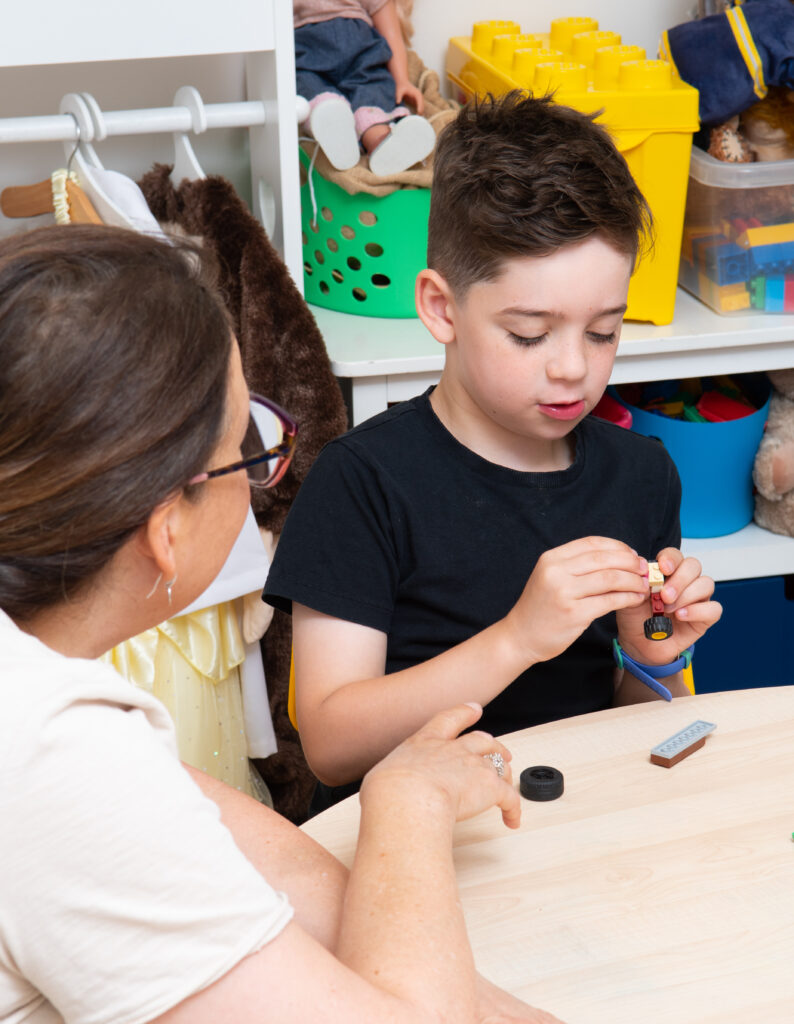
Alongside the Parent Support Group – which currently has 10 participants – Chai provides a range of services designed to support children affected by a family cancer diagnosis. These include the Chai in Schools initiative, which equips teachers with the resources to support children in a school setting, as well as dedicated therapy services at Chai centres, including music, art, play therapy and counselling.
Victoria Portnoi, CEO of Chai, said: “The Princess of Wales’ experience in explaining her diagnosis has put a much-needed spotlight on the challenges faced by families. Chai is seeing more people under 50 diagnosed with cancer than ever before, which means there are an increasing number of children aff ected by a parent’s illness. Children know more than they are given credit for, and having the right language to communicate appropriately is essential.”
She added: “Chai takes a holistic approach to cancer support – looking beyond the medical aspects to consider the emotional and psychological impact on the entire family. Our services exist to ensure that no child or parent has to navigate this journey alone.”